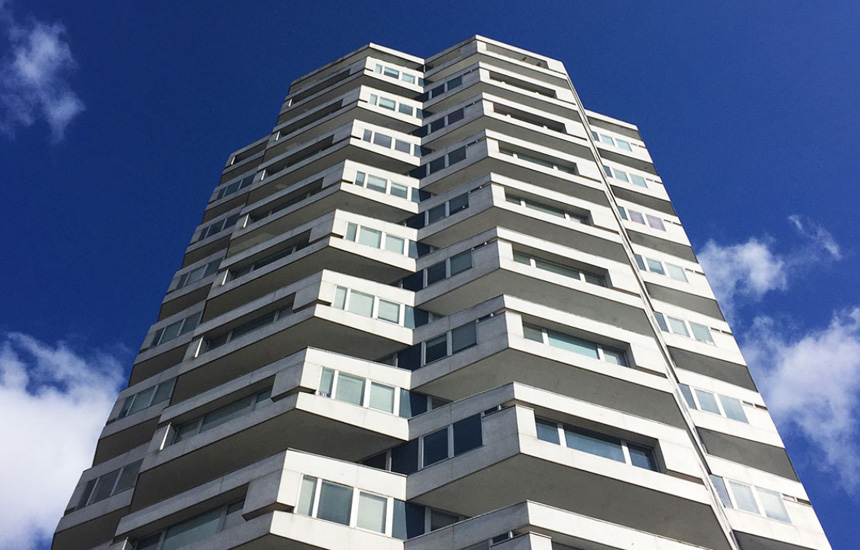
In the mid-20th century, Croydon was reimagined as a futuristic office hub, earning the nickname “Little Manhattan” for its high-rise skyline. This transformation was led by Alderman James Marshall and featured iconic Brutalist designs by architect Richard Seifert, who utilized concrete structural columns known as piloti to elevate his buildings. The most recognizable landmark from this era is the NLA Tower, or “50p building,” completed in 1970 with its unique staggered hexagonal floors.
Croydon continues to pioneer urban engineering in the 21st century. Completed in 2020, the “Ten Degrees” development on George Street was the world’s tallest modular building upon its completion, standing at 135 m. Constructed from 1,526 volumetric steel units built in a factory, the towers rose at an incredible rate of 1.5 floors per week. This modular method reduced construction time by 42% and embodied carbon by 40%, proving that Croydon’s architectural spirit remains at the vanguard of innovation.